


The Rising Expectations for Roland Garros 2026 Marketing Strategies

Roland Garros 2026: The Marketing Build-Up to Tennis’ Clay-Court Showcase
As the tennis calendar shifts from the spring Masters events toward the clay-court season, attention across the sports marketing industry is increasingly turning to the French Open. Held annually at the historic Stade Roland Garros in Paris, Roland Garros remains one of the most distinctive global sporting events, blending tradition, premium sponsorship opportunities, and expanding digital engagement.
For brands, the tournament represents more than just the second Grand Slam of the season. It provides a concentrated marketing moment that combines global viewership, strong European consumer markets, and some of the most recognizable athletes in tennis. As the 2026 edition approaches, sponsors, broadcasters, and tournament organizers are already building campaigns designed to maximize the event’s commercial impact (Deloitte Sports Industry Outlook, 2025).
The Commercial Value of Grand Slam Tennis
Grand Slam tournaments continue to be among the most valuable properties in international sport. Their two-week format allows sponsors to activate campaigns across multiple stages of competition, from early-round storytelling to championship weekend visibility.
For Roland Garros partners, the extended schedule provides a range of engagement opportunities throughout the event. Marketing activations during the tournament often include:
global broadcast integrations during key matches
social media storytelling featuring athlete preparation and training
branded hospitality experiences for corporate partners
on-site fan engagement zones around the venue
This structure allows brands to maintain continuous visibility across the entire tournament rather than relying on a single event window. According to the Fédération Française de Tennis, Roland Garros attracts hundreds of thousands of spectators on site while reaching hundreds of millions of viewers worldwide through broadcast and digital platforms.
Clay-Court Storylines and Athlete Marketing
Another important component of Roland Garros’ marketing appeal is its strong narrative structure. The clay surface creates unique competitive dynamics, often producing dramatic rallies and longer matches that increase broadcast engagement.
The tournament also continues to benefit from the legacy of clay-court dominance established by Rafael Nadal, whose historic success in Paris helped elevate the global profile of the event. In recent years, a new generation of stars such as Carlos Alcaraz and Iga Świątek has taken center stage, giving sponsors fresh personalities to build campaigns around.
From a sports marketing perspective, these athletes play a critical role in amplifying tournament exposure. Their social media channels act as powerful distribution platforms, sharing practice sessions, behind-the-scenes content, and match highlights that extend the reach of Roland Garros far beyond traditional broadcast audiences (Nielsen Sports Media Report, 2025).
Digital Distribution and Fan Engagement
The digital transformation of tennis broadcasting has also reshaped the commercial landscape of Roland Garros. Matches from the tournament are now distributed across a combination of traditional television networks and streaming platforms, enabling fans to watch multiple courts simultaneously.
This shift toward digital distribution has created new opportunities for sponsors to measure engagement more precisely. Platforms can now track viewer behavior such as match watch time, player-specific engagement levels, and geographic audience patterns.
For marketing teams, these insights allow brands to evaluate the effectiveness of campaigns tied to specific matches or athletes. Instead of relying solely on estimated television impressions, sponsors can analyze real-time digital interaction data to refine their marketing strategies.
The Visual Identity of Roland Garros
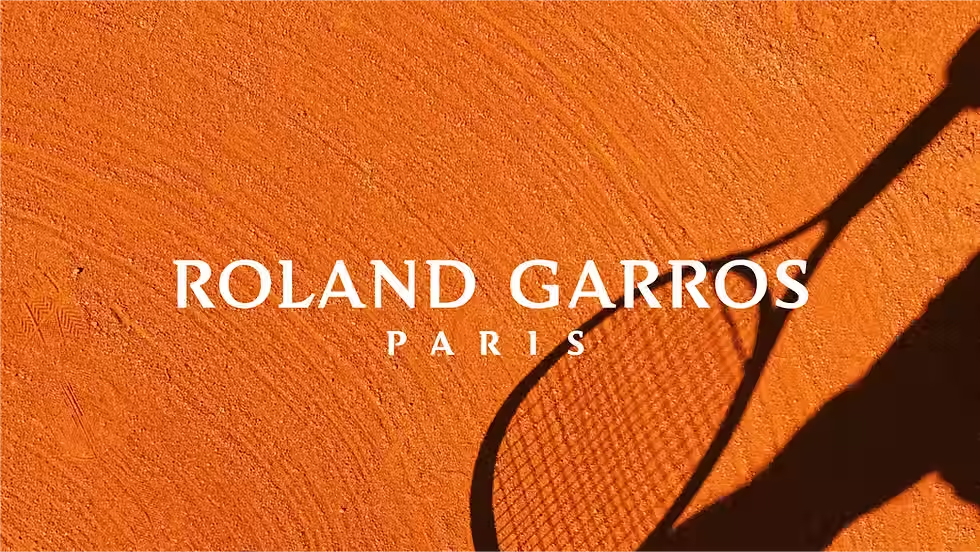
The distinctive red clay courts and Parisian atmosphere give Roland Garros one of the most recognizable visual identities in global sport, making it especially attractive for brand storytelling and broadcast imagery.
Conclusion
The French Open remains one of the most powerful marketing platforms in tennis. Its combination of historic prestige, global audiences, and strong athlete narratives creates an environment where brands can engage fans across multiple channels.
As the 2026 tournament approaches, sponsors and broadcasters are increasingly focused on integrating digital engagement strategies alongside traditional broadcast exposure. The ability to combine global reach with measurable audience data is transforming how companies evaluate the value of sports partnerships.
For sports marketers, Roland Garros offers a clear lesson in the evolving business of tennis: success no longer depends solely on visibility during the tournament itself. Instead, it comes from building year-round storytelling strategies that connect athletes, fans, and brands across both physical venues and digital platforms.


Comments