


Inside the WNBA Sponsorship Boom Driving Record Breaking Brand Deals

Inside the WNBA's Record-Breaking Sponsorship Season
The WNBA is in the middle of its 30th season, and by nearly every commercial metric it is having its biggest year yet. What started as a modest sponsorship category just a few years ago has turned into one of the fastest-growing corners of sports marketing, with blue-chip brands now signing standalone, multiyear deals instead of treating the league as an afterthought bundled into broader NBA packages.
From Potential to Proof
WNBA Chief Growth Officer Colie Edison has described the shift bluntly: the league has moved from being seen as a bet on potential to being treated as proven value (Marketing Brew). The numbers back her up. Sponsorship revenue grew roughly 40 percent year over year heading into the 2026 season, and Edison expects that pace to continue as the league welcomes blue-chip brands like Procter & Gamble, Mars, and Amazon Web Services (Marketing Brew).
A separate analysis pegged the league's total sponsorship market at 105 million dollars in 2025, up 45 percent from 72.3 million dollars the year before, with deal volume up 20 percent, brand participation up 16 percent, and average deal size climbing 21 percent (SponsorUnited). That combination, more brands spending more money per deal, is the clearest sign that this growth reflects genuine conviction rather than experimental budget testing a new category.
Who's Actually Writing the Checks
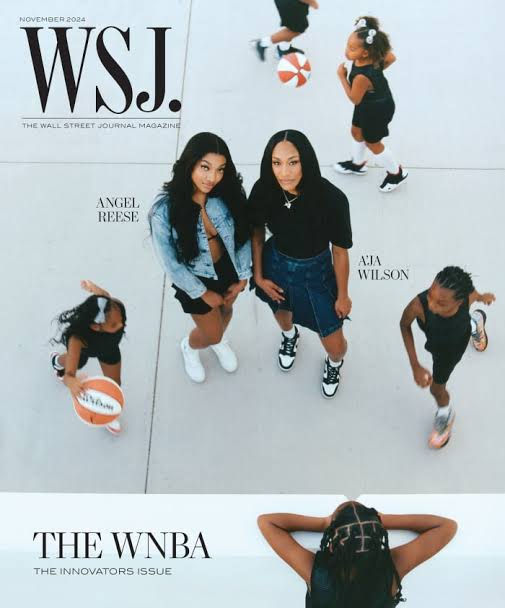
The brand list reads less like a typical sports sponsorship roster and more like a cross-section of consumer packaged goods and financial services. Five years ago only one sponsor held a standalone WNBA deal. Today there are 13, including Ally, Delta, Bumble, and Reebok (Women We Admire). Procter & Gamble entered the league this year as an official partner, launching with product created in collaboration with stars A'ja Wilson and Paige Bueckers, while Tampax stepped in as Official Period Care Sponsor beginning at the WNBA Draft's Queens Court activation (WNBA.com).
AT&T has secured a permanent, league-wide position on the back of every team's jersey across all 15 franchises, a placement that automatically scales in value as the league's visibility grows (Blinkfire).
A few sectors are driving the sharpest growth in average deal size:
Consumer Products spending is up 242 percent, the single fastest-growing category behind the sponsorship boom.
Healthcare and Financial services brands have grown their commitments by well over 100 percent and 27 percent respectively, sectors that typically prioritize measurable, stable reach over short-term hype.
The league's Changemakers program, a sponsorship tier built around brands pledging support beyond pure financial commitment, added Amazon Web Services as its seventh member this year (WNBA.com, SponsorUnited).
The Numbers Behind the Hype
It isn't just brand logos multiplying, the underlying business metrics are moving just as fast. CNBC calculations put average WNBA team valuations at roughly 460 million dollars, anchored by the Golden State Valkyries becoming the first billion-dollar franchise in women's sports history (Women We Admire). T
he league's 30th-season anniversary activations reflect that scale too, with more than 30 brands scheduled to activate at the WNBA Live fan festival during All-Star Weekend in Chicago, up from just six brands in 2022 (Women We Admire). Social and broadcast engagement has followed a similar trajectory.
An earlier Relo Metrics report found WNBA teams generated a record 136 million dollars in sponsor media value in a single season, with brands like Nike, AT&T, and Michelob Ultra among the biggest beneficiaries as TikTok engagement around the league jumped 470 percent year over year (Relo Metrics via Business Wire).
Why Brands Are Moving Now
What makes this moment different from prior surges of interest in women's sports is the durability of the commitments being signed. Edison summed up the shift in a comment to Marketing Brew, saying the league is now viewed as "a serious asset class" rather than a corporate experiment (Women We Admire).
For marketers still on the sidelines, the risk calculation has flipped, brands that once treated a WNBA sponsorship as a low-cost test are now watching category leaders lock in multiyear deals and worrying about being crowded out of the space entirely. As the league heads deeper into its 30th season, expect that competitive pressure among brands to keep pushing sponsorship dollars higher.
Sources: Marketing Brew, SponsorUnited, Women We Admire, WNBA.com, Blinkfire, Business Wire


Comments